If you own a condo in Pattaya, or you expect to inherit a condo in Thailand from a parent or partner, the rules are different from buying one. A foreign heir still has to fit Thailand’s condo ownership rules, the Land Office needs a specific set of documents, and the fee depends on how the heir was related to the owner. This guide explains the process in plain English, using official and legal sources, so you know what to prepare before you meet a lawyer.
This is general information, not legal advice. Succession cases depend on nationality, marital status and the exact wording of a will, so always have a Thai lawyer check your own situation.
Can a Foreigner Inherit a Condo in Thailand?
Yes, a foreigner can inherit a condo unit, but keeping it in their own name is another question. Under the Condominium Act, foreign ownership in one building is capped at 49% of the total floor area of all units. Foreigners also have to qualify under Section 19 of the Act, for example by bringing the purchase money into Thailand in foreign currency. Our guide to the foreign quota for Pattaya condos explains how the 49% limit works when you buy.
For heirs, a legal commentary by the Thai law firm Tilleke & Gibbins explains that foreigners who qualify under Section 19 can register the inherited unit, as long as the 49% quota is not exceeded. A foreign heir who does not qualify, or whose registration would break the quota, must notify the authorities in writing within 60 days and dispose of the unit within one year of acquiring it. That commentary dates from 2013, so ask a lawyer to confirm how the Land Office applies the rule today.
Who Inherits If There Is No Will?
When someone dies without a valid will, Thailand’s Civil and Commercial Code passes the estate to statutory heirs. Section 1629 lists six classes, entitled in this order:
- Descendants
- Parents
- Brothers and sisters of full blood
- Brothers and sisters of half blood
- Grandparents
- Uncles and aunts
The surviving spouse is also a statutory heir, with a share set by special rules in Section 1635. In practice, when relatives inherit a condo in Thailand without a will, a family can end up with several co-heirs who must agree on the condo, and some of them may not qualify as foreign owners. A clear will avoids much of that.
Making a Thai Will for Your Pattaya Condo
To control who will inherit a condo in Thailand, many foreign owners make a separate Thai will that covers only their Thai assets, such as the condo and a Thai bank account. The Civil and Commercial Code recognises several forms of will, including these three:
- Ordinary written will (Section 1656): in writing, dated, and signed by the owner in front of at least two witnesses who are present together and sign at the same time.
- Handwritten will (Section 1657): the owner writes the whole text, the date and the signature by hand.
- Public document will (Section 1658): the owner declares the terms to a district officer in front of at least two witnesses, and the officer records, signs and seals it.
A Thai will usually names an executor and identifies the unit by its condo title deed details. If you are leaving the unit to a foreigner, think ahead about whether that person can qualify under Section 19, or whether the will should allow the unit to be sold and the money passed on instead. A lawyer can draft wording that fits both Thai law and your home country’s rules.
How to Inherit a Condo in Thailand at the Land Office
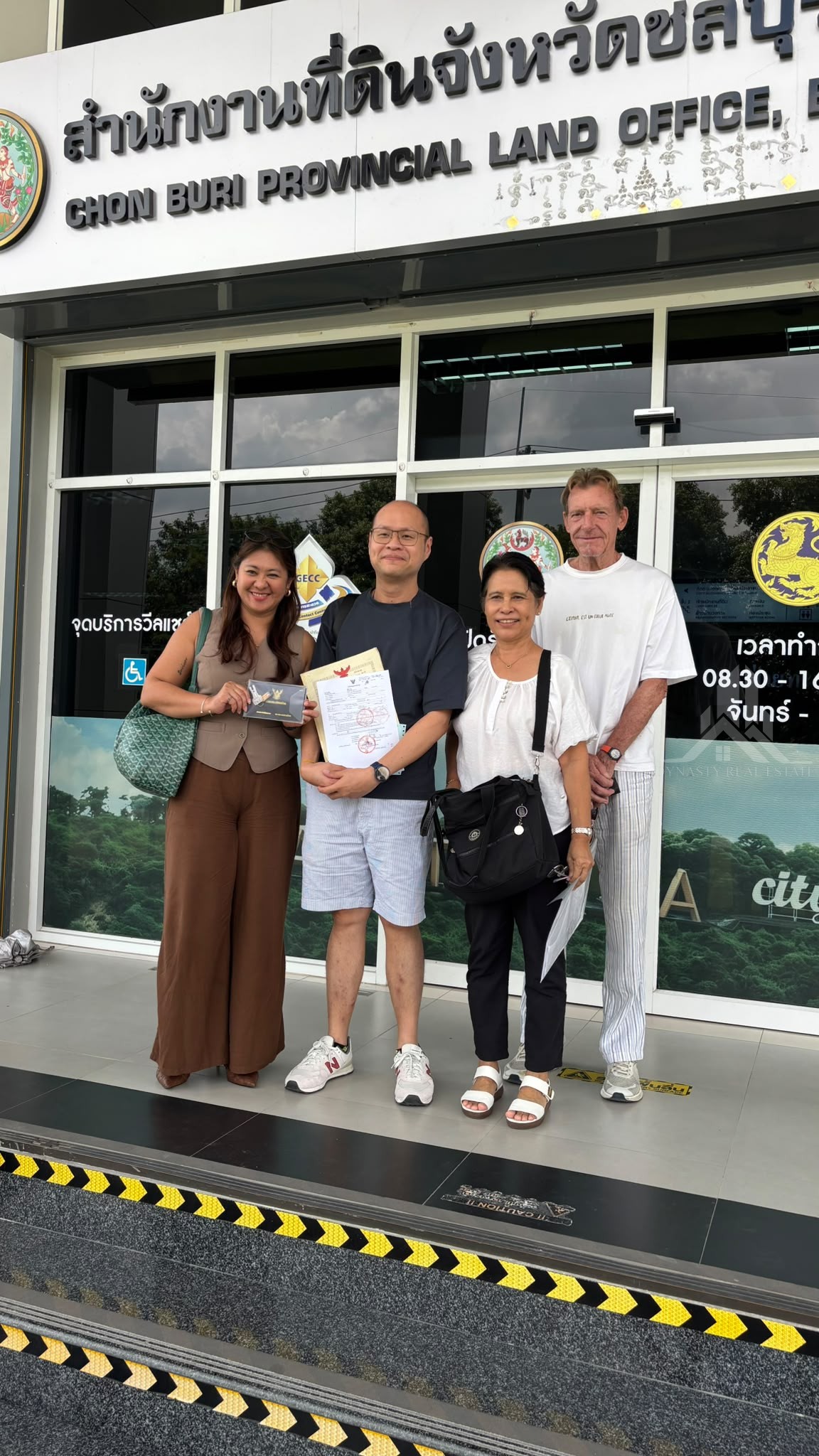
For Pattaya condos, ownership changes are registered at the Chon Buri Land Office, Banglamung branch. According to the Tilleke & Gibbins commentary, heirs generally need to bring:
- The death certificate of the owner
- The will, or other proof of the right to inherit
- A court order appointing an estate administrator, if there is one
- A family tree showing the heirs
- The condo title deed and the heir’s identity documents
If no court has appointed an administrator, the same commentary says the registration is subject to a 30-day public notice period, so other potential heirs can object. Documents issued abroad usually need certified translation and legalisation, which your lawyer can arrange. The juristic person office of the building will also need to be informed so that common fees are billed to the new owner.
Inheritance Transfer Fees and Tax in Thailand
The Thai government’s page on condominium fees for foreigners lists the inheritance transfer fee as 2% of the appraised value. When the transfer is between ascendants and descendants, or between spouses, the fee is 0.5% of the appraised value. The same page says inheritance under the Land Code’s Section 93 has no withholding tax, no specific business tax and no stamp duty.
As a simple example, if the Land Office appraises a unit at 2,000,000 THB, a child inheriting from a parent would pay a 0.5% fee of 10,000 THB, while a friend or nephew would pay 2%, or 40,000 THB. The appraised value used when you inherit a condo in Thailand is set by the Land Office and is often different from the market price.
Thailand also has an inheritance tax, but it only applies to very large estates. According to PwC’s Thailand tax summary, heirs pay it only on the value they receive above 100 million THB from each person who died. The rate is 5% for ascendants and descendants and 10% for other heirs, and legacies to a spouse are exempt. Most Pattaya condo inheritances fall well below that threshold.
Once the unit is in the heir’s name, the yearly land and building tax and the building’s common fees become the heir’s responsibility. Your home country may also tax the inheritance, so check with a tax adviser there.
Keep, Rent or Sell an Inherited Pattaya Condo?
Once the unit is registered, people who inherit a condo in Thailand usually choose between three paths:
- Keep it as a holiday home, if the heir qualifies as a foreign owner and the quota allows it. If you need to show that money came from abroad for future dealings, our guide on transferring money to Thailand for a condo explains the paperwork.
- Rent it out to cover common fees and tax while the family decides. Rental income is taxable, and a landlord has reporting duties for foreign tenants.
- Sell it, which may be required within one year if the heir cannot keep the unit. Older units often sell faster after a refresh, and our Pattaya property renovation team can quote that work.
If you plan to sell, compare the unit with similar Pattaya property for sale and with owner-listed units on our direct listings page to set a realistic asking price. No one can promise a sale price or timeline, so plan with a buffer if a one-year deadline applies.
Practical Steps for Owners Planning Ahead
- Keep the documents your family will need to inherit a condo in Thailand together: the condo title deed, purchase contract and foreign exchange transaction documents, and tell your family where they are.
- Make a Thai will for Thai assets and keep a copy with your lawyer or executor.
- Check that your home-country will does not contradict your Thai will.
- Ask whether your chosen heir can qualify as a foreign owner, and what should happen if they cannot.
- Keep common fees and land and building tax paid, so heirs do not inherit arrears.
Buying for the first time? Read can foreigners buy a condo in Pattaya to see how ownership is set up from day one, which makes planning easier later.
Frequently Asked Questions
Can my foreign child inherit my Pattaya condo?
Yes, a foreign child can be named as heir. Whether they can keep the unit in their own name depends on qualifying under Section 19 of the Condominium Act and on the building’s 49% foreign quota. If they cannot, the unit may have to be sold within one year.
What is the Land Office fee to inherit a condo in Thailand?
The Thai government lists 0.5% of the appraised value for transfers between parents and children or between spouses, and 2% for other heirs.
Do I need a Thai will if I already have a will at home?
It is not always required, but a foreign will may need translation, legalisation and sometimes a Thai court process before the Land Office accepts it. Many owners make a Thai will for Thai assets to keep the process simpler. Ask a lawyer which approach suits you.
Is there inheritance tax on a Pattaya condo?
Only if the heir receives more than 100 million THB from one person. Above that amount, the rate is 5% for parents and children, 10% for others, and spouses are exempt.
How long does it take to register an inherited condo?
Timing to inherit a condo in Thailand depends on the documents and whether a court appoints an administrator. Without a court order, a 30-day public notice period applies before registration, and collecting and legalising documents from abroad adds time.
If your family needs to inherit a condo in Thailand, or has already done so, Dynasty Real Estate helps owners and heirs in Pattaya, Jomtien and Pratamnak rent, renovate or sell condos. For the legal side, we recommend working with an independent Thai lawyer. Message us on WhatsApp at +66 98 403 9318 or on LINE at 0984039318 to talk about your unit.